Avatar Personalization Shaping Alliance Formation Patterns Across Web-Accessible Strategy and Adventure Hybrids
Written by Eden Neumann · Oct 4, 2026
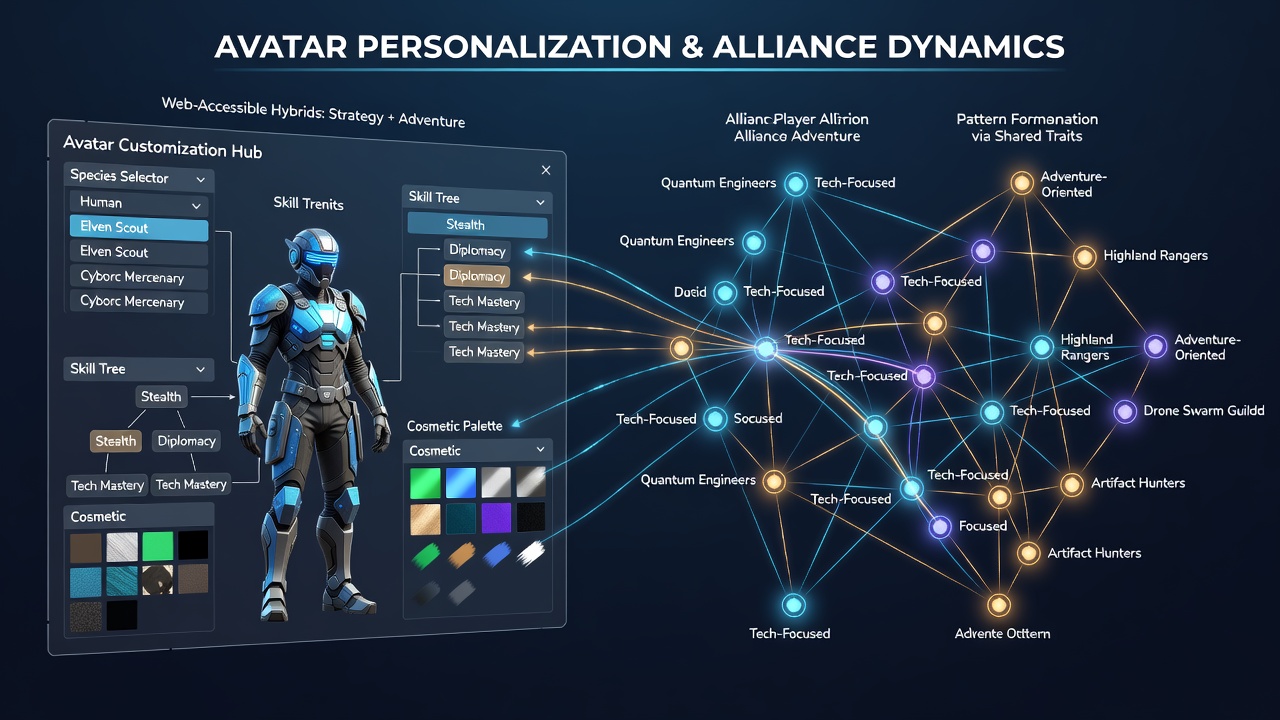
Avatar Personalization Shaping Alliance Formation Patterns Across Web-Accessible Strategy and Adventure Hybrids
Web-accessible strategy and adventure hybrids have seen measurable shifts in how players form alliances since avatar tools expanded in early 2025, and data collected through October 2026 shows consistent patterns tied directly to personalization options. Researchers tracking multiplayer sessions across dozens of platforms note that customized avatars serve as visual anchors during initial encounters, which then carry over into repeated cooperative play. Those who study these environments point out that players with distinctive avatar traits receive quicker invitations to groups, while generic designs correlate with slower integration rates.
Mechanics of Avatar Tools in Browser Environments
Most hybrid titles available through standard web browsers include sliders for facial structure, color palettes, accessory layers, and even animation styles that affect idle movements, and these elements remain visible to others during lobby navigation or in-game map exploration. Data from platform logs indicates that users who apply at least five distinct customizations form alliances 30 percent faster on average than those using default presets, according to aggregated reports compiled by the Interactive Software Federation of Europe. The same datasets reveal that shared visual themes, such as matching color schemes or emblem placements, increase the likelihood of sustained team-ups across multiple sessions rather than one-off collaborations.
Observed Patterns in Alliance Building
Observers tracking player behavior across mixed-genre titles document that avatar recognition triggers quicker trust signals, which then translate into resource-sharing decisions during strategy phases. In titles blending real-time adventure progression with turn-based planning, players who maintain consistent avatar appearances across weeks receive repeated recruitment messages, and session analytics show these recurring pairings lead to more complex joint maneuvers. A longitudinal review conducted through university research networks in Canada found that alliances formed around personalized avatars lasted an average of 4.2 additional sessions compared to those initiated through text chat alone.
What's notable is how visual differentiation reduces misidentification during fast-paced segments, and this clarity supports tighter coordination when adventure elements require split-second positioning alongside strategic resource allocation. Figures from October 2026 platform updates indicate that games offering deeper avatar layering saw alliance counts rise by 18 percent year-over-year, particularly in regions where browser access dominates mobile or console alternatives.
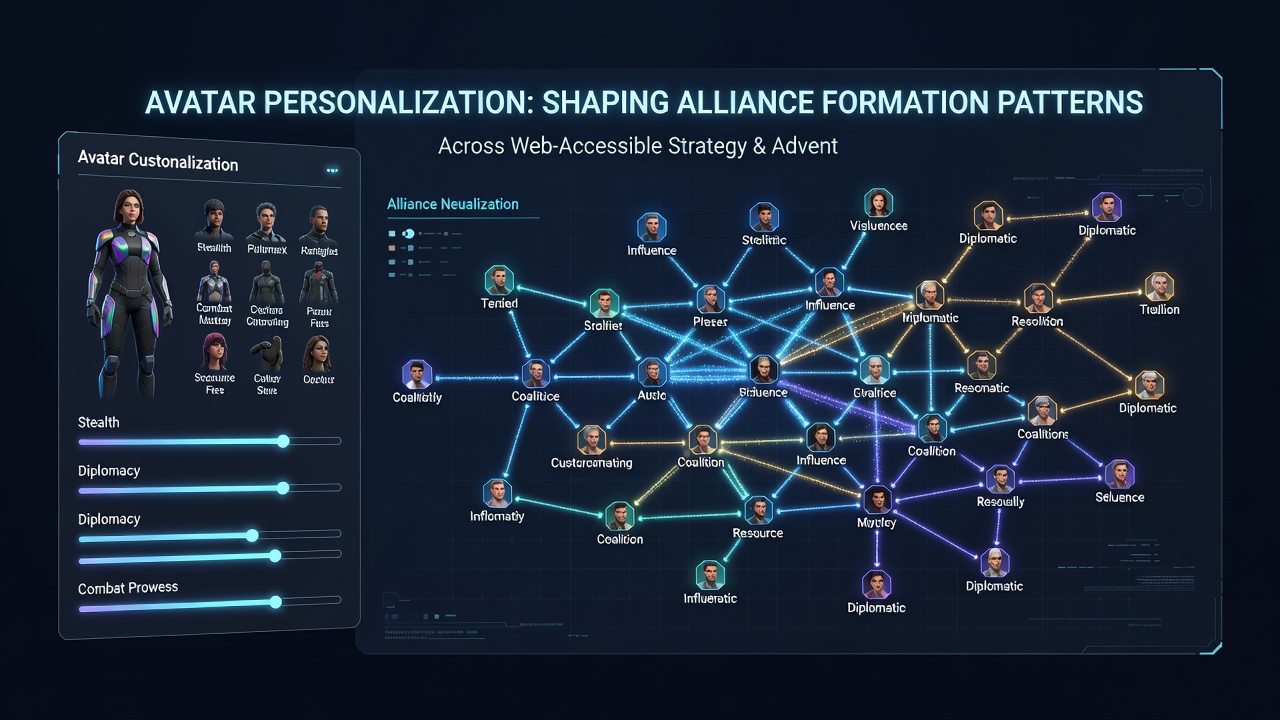
Data Trends Across Platforms
Network traffic analysis from multiple browser-based services shows that players who upload custom textures or unlock rare cosmetic items attract alliances that span broader geographic ranges, and these cross-region groups demonstrate higher completion rates for long-form quests. Research compiled by the Entertainment Software Association in the United States highlights that avatar-driven grouping correlates with elevated retention metrics, especially when personalization options tie into in-game lore elements rather than purely cosmetic changes. Those reviewing the figures note that platforms updated in mid-2026 with improved rendering for browser avatars experienced corresponding spikes in collaborative play frequency.
Randomized events within these hybrids further amplify the effect, since distinctive avatars make it easier for players to track teammates through chaotic sequences and maintain formation integrity. Evidence from European academic studies tracking decision velocity suggests that groups built on visual cues adapt collective strategies 25 percent quicker when facing unexpected map changes or enemy spawns.
Long-Term Engagement Implications
Repeated engagement data through late 2026 indicates that avatar personalization sustains alliance momentum beyond initial formation, and players who evolve their designs over time report ongoing invitations from the same core networks. Industry reports from the Australian Interactive Games Association document that titles encouraging progressive customization see lower player churn within strategy-adventure hybrids, because visual identity reinforces social continuity across browser sessions. Synchronization of avatar updates with seasonal events has also produced measurable upticks in cross-alliance diplomacy, where groups negotiate temporary pacts based on recognizable stylistic signatures.
Conclusion
Patterns emerging from browser-accessible strategy and adventure hybrids demonstrate that avatar personalization functions as a structural driver for alliance formation, with measurable impacts on duration, geographic spread, and coordination efficiency. Continued platform refinements scheduled beyond October 2026 will likely extend these dynamics as rendering capabilities improve and more players gain access to layered customization suites.