Observing Interface Layout Effects on Collaborative Choices in Mixed-Genre Browser Casual Platforms
Written by Cameron Baumann · Sep 20, 2026

Observing Interface Layout Effects on Collaborative Choices in Mixed-Genre Browser Casual Platforms
Browser-based casual platforms that combine puzzle elements with action sequences and strategic planning have grown in user numbers through 2026, and researchers track how different interface arrangements guide the ways players coordinate their moves. Data from industry reports show that layout variations such as chat panel placement, resource meters positioning, and shared map visibility directly shape the timing and type of decisions groups make during sessions. As of September 2026, platforms hosting these hybrid titles report average session lengths extending by several minutes when collaborative tools sit within central screen areas rather than peripheral zones.
Layout Configurations and Player Coordination Patterns
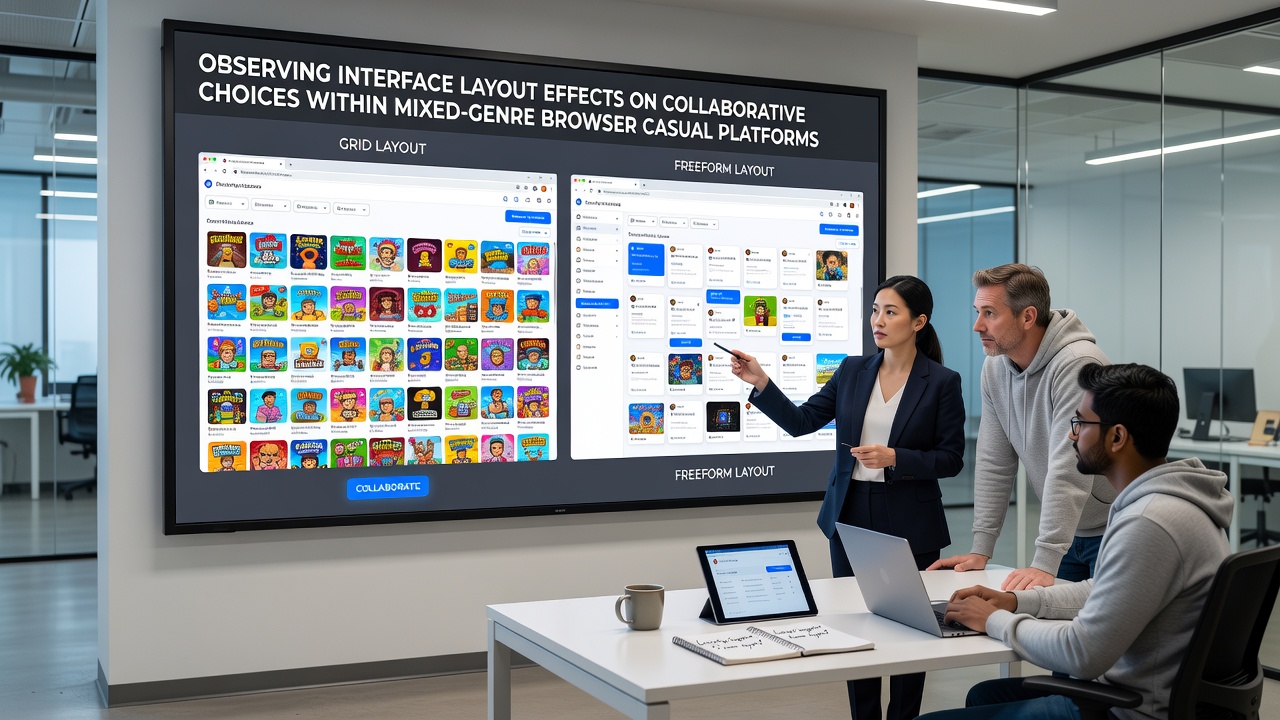
Studies of mixed-genre environments indicate that horizontal toolbars at the top of the screen encourage faster resource sharing among participants compared with vertical side panels. Observers note that players in puzzle-action hybrids tend to reference shared objectives more frequently when status indicators occupy the lower third of the viewport, because this area remains visible while attention stays on the main action field. Researchers at several academic institutions have measured decision velocity, defined as the rate at which groups select joint strategies, and found measurable differences based on whether information panels overlap or remain separate from the primary play area.
One analysis of browser titles released between 2023 and 2025 revealed that platforms using modular drag-and-drop interfaces saw increased instances of players adjusting their own views to align with teammates' perspectives. This adjustment behavior appeared more often when core collaboration widgets could be repositioned without disrupting ongoing gameplay loops. Figures from the Entertainment Software Association highlight that titles incorporating such flexibility maintained higher repeat participation rates across North American user bases during the same period.
Data on Decision Trees in Hybrid Environments
Collective choice patterns shift when interface elements for strategy layers appear alongside real-time action feeds. Evidence gathered from session logs shows that groups facing randomized puzzle events make more conservative resource allocations when critical timers sit directly adjacent to chat functions rather than in a separate overlay. Those who studied synchronization across multiple titles report that overlapping windows reduce the frequency of verbal coordination cues, while dedicated side columns preserve them.
Turn-based strategy components embedded within faster arcade segments further demonstrate sensitivity to layout density. Data patterns collected in 2025 indicate that players allocate shared assets more evenly when allocation sliders remain grouped with the central map instead of tucked into expandable menus. This grouping correlates with shorter intervals between proposal and agreement phases during collaborative segments.
Regional Trends and Platform Adaptations
European digital engagement surveys conducted through 2026 document similar layout sensitivities across casual browser audiences, although the magnitude of effects varies by average connection stability. Platforms serving users in regions with higher latency report greater reliance on static central panels that display teammate status without requiring additional clicks. Australian research groups tracking browser game usage have noted that titles allowing interface scaling options experience steadier collaboration metrics during peak evening hours when multiple household devices share connections.
Industry organizations tracking browser platform metrics observe that updates to default layouts in September 2026 produced immediate changes in recorded group decision sequences. Titles that consolidated action and strategy controls into a single resizable cluster recorded fewer instances of misaligned player inputs compared with versions that kept those controls separated by genre type.
Measurement Approaches Used by Researchers
Analysts employ heat-mapping of cursor movements and chat timestamp analysis to quantify how layout changes alter collaborative flow. These methods reveal that players shift attention patterns within three to five seconds after an interface element moves, and that such shifts influence the order in which strategy proposals receive responses. Longitudinal data sets compiled from public browser platforms show consistent correlations between panel proximity and the adoption rate of joint tactics across puzzle-action hybrids.
Additional metrics track the number of simultaneous actions executed without explicit discussion, and these figures rise when shared timers and resource counters occupy overlapping screen regions. Observers examining browser logs from 2024 onward confirm that the placement of confirmation buttons for group decisions affects acceptance speed, with buttons located near active chat streams producing shorter confirmation windows than buttons positioned in isolated corners.
Conclusion
Interface layout continues to function as a measurable variable in how participants navigate collaborative choices inside mixed-genre browser casual environments. Ongoing collection of session data through late 2026 supplies further evidence that spatial arrangement of tools, indicators, and communication elements shapes both the timing and content of group decisions. Platforms that adjust these arrangements based on observed patterns maintain distinct engagement profiles across their user bases.