Seasonal Event Mechanics Fueling Participation Increases in Multiplayer Browser Action Strategy Games
Written by Morgan Krause · Oct 18, 2026
Seasonal Event Mechanics Fueling Participation Increases in Multiplayer Browser Action Strategy Games
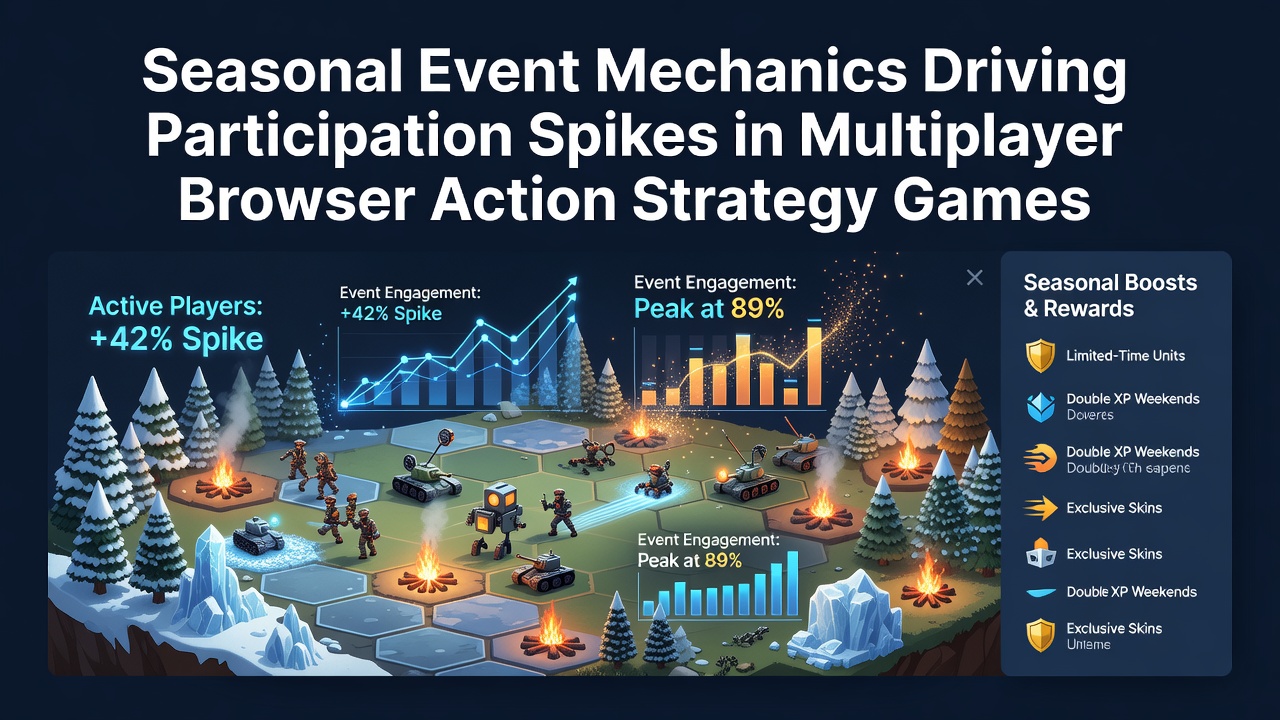
Seasonal event mechanics in multiplayer browser action strategy games operate through time-limited challenges that layer new objectives onto core gameplay loops, and these systems have produced measurable upticks in daily active users across platforms since the mid-2010s. Developers integrate resource collection phases, alliance formation prompts, and ranking resets that reset every few weeks, creating repeated entry points for both returning and new participants. Data from industry tracking services shows participation often climbs between 40 and 70 percent during peak windows of these events, with browser titles benefiting from zero-install access that lowers barriers for casual logins.
Core Components of Seasonal Event Design
Event structures typically combine global timers with personal progress trackers, where players complete action-oriented tasks such as unit deployments or territory captures while pursuing strategy elements like research upgrades and supply chain management. These layers appear in titles that blend real-time combat with turn-based planning, and the browser environment allows seamless session continuation across devices without client downloads. Observers note that randomized drop rates for event-exclusive items further encourage repeated short sessions, because each login carries a chance to advance personal goals that feed into larger group objectives. In October 2026 several browser platforms recorded simultaneous spikes coinciding with overlapping harvest-themed and conflict-escalation events, confirming the pattern across multiple independent titles.
Player Behavior Patterns During Event Windows
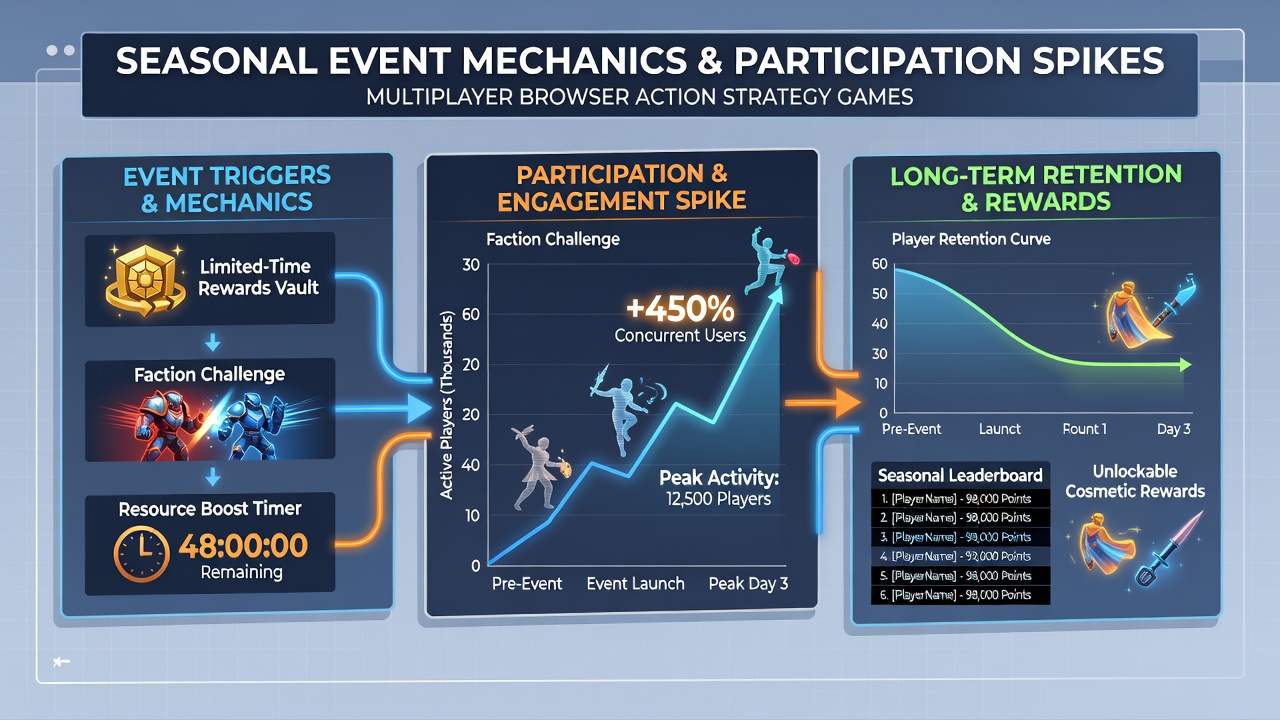
Analytics platforms document that average session length extends by 15 to 25 minutes when seasonal rewards include cosmetic upgrades and temporary power boosts, while concurrent user counts rise most sharply in the first 48 hours after an event launches. Those who study retention metrics report that collaborative goals, such as collective resource thresholds or shared boss encounters, accelerate alliance recruitment and sustain activity through the middle weeks of an event cycle. Browser-specific telemetry reveals that peak login clusters occur during evening hours in major time zones, with mobile and desktop traffic converging on the same servers because the underlying HTML5 frameworks handle cross-device state synchronization efficiently.
Technical Implementation in Browser Environments
Developers rely on server-side event flags that toggle new assets and rule modifications without requiring players to refresh clients, and this approach maintains low latency even when thousands of additional users join simultaneously. Real-time matchmaking algorithms adjust queue priorities to favor participants already engaged in event tracks, reducing wait times and keeping momentum high. Research from academic groups examining digital play ecosystems indicates that these backend adjustments correlate directly with the observed participation increases, because frictionless progression updates reward immediate re-engagement. One study conducted across North American and European servers found that games employing progressive difficulty scaling within events retained roughly one-third more users through the full duration compared with static reward models.
Regional Data and Industry Tracking
Figures released by the Entertainment Software Association highlight consistent seasonal lifts in browser strategy segments, while reports from the Interactive Games & Entertainment Association in Australia document similar trends in the Asia-Pacific region during aligned calendar periods. These sources track metrics such as concurrent peak users and average revenue per event, revealing that free-to-access browser titles capture larger absolute participation gains than downloadable counterparts because entry friction remains minimal. Canadian digital economy analyses further separate browser action strategy data from console figures, showing that event-driven spikes account for the majority of quarterly growth in the web-accessible segment.
Long-Term Effects on Player Ecosystems
Repeated seasonal cycles create cumulative progression systems where resources earned in one event carry forward into subsequent ones, encouraging sustained account activity rather than one-off participation. Players who maintain consistent involvement during multiple cycles often accumulate advantages that influence later competitive brackets, producing self-reinforcing engagement loops. Network effect studies from university research teams demonstrate that larger simultaneous player bases during events improve matchmaking quality and reduce queue abandonment, which in turn feeds back into higher retention across the entire platform. Browser infrastructure supports this continuity through persistent cloud saves that preserve state between sessions regardless of device or location.
Conclusion
Seasonal event mechanics continue to shape participation curves in multiplayer browser action strategy games by aligning limited-time incentives with accessible technical delivery. Platform data and cross-regional reports confirm that these systems generate repeatable spikes while maintaining long-term player ecosystems through carried-over progress and collaborative structures. As browser frameworks evolve, the same event patterns are expected to sustain their influence on user behavior into future cycles.